Showing posts with label von sternberg. Show all posts

Sunday, November 08, 2009

Analysister


Ok, after making that last post I still feel the need to go deeper into the subject. That post somehow turned into a general primer about film analysis. All well and good, but I never even got to what I originally wanted to say!!! Oh, and about the name for this post.... it's based on a great album title- Nemesister by Babes in Toyland. Thought it was appropriate since this is a sister post to my last one...

Ok class... last time we covered hidden narratives buried in films by Kubrick and Lynch. One thing I'd like to point out that they both have in common - besides liking to hide secret narratives in their films - is they both make very dreamlike films. Actually that's related to the fact that they like the hidden narratives.... see, a film that reveals secret messages when analyzed is quite a bit like a dream. One major difference though.... to understand the meaning of a dream you need to know the dreamer's personal meanings for all the symbols... a very deeply individual matter fit only for a psychoanalyst (the dreamer himself probably doesn't WANT to know what all his dreams mean!)

I think it's time for me to talk a bit about dreams. I've always loved dreams (try to have them every night). I've also always loved stories and movies that are LIKE dreams... but there are definitely things that work in dreams that WON'T work in movies, and vice verse. Probably the most important difference is that dreams don't need to make sense... you're ASLEEP, so your conscious mind isn't trying to make sense of things. But a movie does need to make sense, at least to some extent. The plot can be all mixed up... as long as the movie makes sense on some level... possibly there's an EMOTIONAL throughline the viewer can follow.

Once you've established that throughline (whatever it might be) you can work in underlying hidden narratives like Kubrick or Lynch do. But unlike the completely personal language of symbols in a real dream, they use universal symbols that will be understood by everyone (everyone who notices them that is... most won't see it if it's beneath the surface). And here's what I love about this.... let's say you notice something fishy in a Kubrick film and start to research a little... or maybe you've read an analysis and decided to look deeper on your own. His messages lead you to mysteries that exist in the real world!! That's not to say that I believe all his conspiracy theories are valid... but the threads he weaves into the tapestry of his films does lead you on to theories that can be found all over the internet... googling names from his films will point out all kinds of weird things... most of which he probably intended. That fascinates me, that a mystery embedded in a fictional movie can lead to a mystery in the real world. It's as if the movie opens up a whole vista...

Also on the subject of the dreamlike nature of their films... my longtime readers (those who manage to wade all the way through these lengthy and text-dense Cinemastudies posts) might recall an article I posted some time ago about Josef Von Sternberg (click his name in Labels below if you're interested). There are several posts on my blog about him actually... I'm referring to one I didn't write but just blatantly ripped off and posted here. Sorry, too lazy at the moment to look up who did write it! But the gist of the article was that while Sternberg was working in Talkies (he did start off in silents) the dialogue was merely a smokescreen to deflect viewers from the REAL story, which was always told VISUALLY. Unlike the vast majority of modern movies, where the story is told almost exclusively through dialogue with visuals just serving as moving illustrations, Sternberg, Kubrick and Lynch tell their stories visually. They of course use dialogue and sound, but as artistic counterpoint to the visuals, to enhance them and provide subtext rather than to illustrate them. There are many people (myself among them, though I wasn't there at the time) who feel that something beautiful was lost when sound came to the movies - or rather I should say when the human voice came to the movies (When MOVIES became TALKIES).

Think of it this way... visuals are processed by the right brain - the intuitive brain, while verbal language is processed in the logical and detail-oriented left brain. The right brain is the realm of dream imagery... free association and metaphor. Spoken language doesn't enter into this realm. Music does (instrumental music). Well ok, to be more accurate, some kinds of singing and spoken poetry DO access the right brain, but not general dialogue the way its spoken in movies these days. In a film by the likes of Kubrick or David Lynch, we watch the STORYLINE with the left brain while the right brain silently absorbs the symbols and metaphors underlying the surface. This means their films ARE structured like dreams... there's a Manifest content (surface story) and a Latent content (subtext). This thought really boggles my mind... I think it explains how the subliminal messages can leak through into the right brain (dreaming mind... the ancient, animal mind... the artist mind) while the left brain (logical, modern) remains unaware of them. The left brain is detail-oriented and can only concentrate on one thing at a time (works "in serial") while the right brain sees patterns and works holistically (works "in parallel). But we usually don't notice what the right brain is doing... it's very quiet while the left brian talks constantly and loud. I've heard them compared like this... think of the left brain as the sun and the right brain as the stars.... there are still stars in the sky in the daytime, but you cant see them because the sun is too bright. If you could filter it out then you could see them.

Very interesting to think of making movies that really affect us like dreams...

Monday, April 27, 2009

Followup notes

A number of observations and/or conclusions I've arrived at after consideration of the recent posts I've made.

Watching all the clips included in my Best in Cinematography playlist made me realize they all share certain things in common...

1) They're all shot in black and white. (DUH!!)

2) They all construct purely imaginative worlds, built from the stuff of history, but not as concerned with accuracy as with the possibility of a world where creative ideas can flourish. This concept runs all through my writing on this blog and elsewhere... I've recently realized it's a thread that links all my favorite authors, music, and movies. Fantasy.... "A world of pure imagination".

3) The stories are told primarily visually... with little or no dialogue. In the case of Von Sternberg, as was brought up in an earlier post about him (click on his name in the labels beneath this post if you're interested) the dialogue was a smoke screen... a surface illusion... a mask of a story designed to subtlely disguise the real story being told through the visuals alone. In Marketa Lazarova, and in Two Lane Blacktop (not included in the playlist but another of my favorites) dialogue is sparse and used almost musically... to punctuate with notes of pure emotion now and then rather than to explain.

4) I'm becoming increasingly aware of a different kind of black and white photography.... markedly different from the high-contrast Expressionist stuff with its emphasis on light and dark areas and with lots of solid black.


Look at the visuals of Marketa Lazarova for instance... not much solid black in most shots... in fact the lighting is very diffused and all-pervasive, being shot outdoors in snow. There also seems to be plenty of fill light, some natural and I'm sure some added artificially. The visual interest lies in contrasts of shapes, textures, tones... in other words, the principle elements of design... of art itself.

This suggests to me that it's necessary to design your sets.. in fact your entire production, well before the story writing stage -- with these textures and shapes in mind. Much the way modern fantasy movies and video games are based on concept art which is done very early in the planning stages of a production.

Thursday, April 23, 2009

YouTube I think I love you!!! Embeddable playlists plus Marketa Lazarova posted on the Tube!!!


Let me start this post by citing Sturgeon's Law (that's Theodore Sturgeon - yeah, he's a science fiction writer, you got a problem with that?): "90% of everything is crap". And that's definitely true of YouTube. But when you start to find that hidden 10% - the diamonds in the rough, nestled down among the garbage, that's when you really see the true power of Web 2.0.

I've only recently started to work on my YouTube channel, and begun to discover the power of the Tube. Tonight I was busy Tubesurfing, favoriting some clips, when I noticed I could create a Playlist, and not only that, but I could also embed said playlist on my blog!!!

So here it is, my Best of Cinematography list (very subjective of course). Mouse over it to see the various included clips, or just use the left and right arrows to move to a new clip.

My most astonishing discovery tonight.... Marketa Lazarova uploaded to the Tube in 15 installments.... in its entirety!!!!! . I had tried to find even brief clips from this masterpiece in the past to show people the pure brilliance of Franticek Vlacil's cinematic genius, and was only able to find 2 clips. But tonight I stumble upon the entire freaking movie!!!!. And also a fantastic music video with scenes from the film set to the Rolling Stones' Gimme Shelter.

Ok, anyway, yeah -- I'm a little excited about it.


*** *** ***

Wow, now I see 2 of the video clips don't allow embedding (unfortunately including Marketa Lazarova). So they won't show here on my blog. Just click through to my YouTube Channel and look at the playlist itself (where it says Best in Cinematography) and click to "see all" (or use the direct link in the paragraph above). So, the love affair with the New YouTube continues, but with caveats.

Saturday, October 27, 2007

Friday, September 07, 2007

Cinemastudies; Formalism in film

Photo Sharing and Video Hosting at Photobucket

Wow, it must be finals time at the U of Me film school (faculty = me, myself & I)! I'm cranking out these essays like there's no tomorrow! It's a nice way to study though - since I'm not enrolled in an actual school, and completely self-educated, I can post my essays and notes here rather than turning them in to be graded, and maybe get some feedback or discussion. I find just reading and thinking about this stuff isn't really enough - it's really necessary to write about it to make it sink in. (And hey, how cool to do an essay that includes film clips!??)

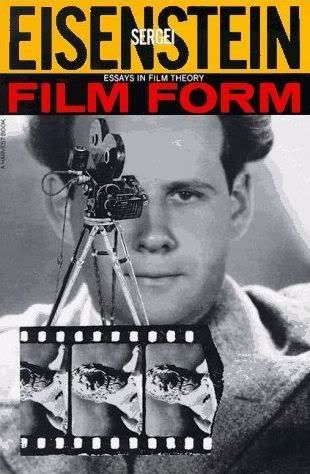
I'm still riding on a high that all started when I discovered Madame Tutli-Putli, which supercharged my Lighting obsession, and then led into von Sternberg studies, which has now led me, through Montage, back to the seminal Eisenstein and the Soviet Formalist filmmakers. Some time ago I had read Film Form and a few other books by/about Eisenstein, and have ever since been fascinated by his concepts of montage. But watching his films is a bit difficult, or rather unenjoyable for the most part. I think it's because he's such a complete Formalist - he treats filmmaking almost more like a science than an art, and eschews realism almost entirely in favor of a more synthetic approach where he creates a new reality through juxtaposition and opposition of shots in editing. He considers film a language, with individual shots the words, and he believes they can be linked together in an intelligible way to create sentences. To me this is going too far.... visual images, and especially moving images, are not the same as words or pure symbols (though they can certainly carry strong symbolism at times). His colleague Pudovkin was another of the Soviet Formalists, and also favored montage, though his wasn't so rigidly structured. He gave more focus to the actors and the stories, as opposed to Eisenstein, who's main character was usually "the populace" and for whom acting hardly factored in. Eisenstein believed in finding actors who look the part, using whatever makeup and costuming was necessary, and then treating them like chess pieces on a board. He would tell them exactly how to move, what shapes to make with their arms and bodies. Von Sternberg (a later Formalist and a student of Eisenstein's film theories) did much the same thing, though he (like Pudovkin) had main characters and told stories (however incoherent they might be on the surface). He (V. S.) did use montage at times, like that brilliant sequence I posted in the last entry, and used a sort of synthetic language of film, but in a much more enjoyable and natural way IMO.

Perhaps I should explain what formalism is.

Lately I've been reading a textbook called Film Art: An Introduction by David Bordwell and Kristin Thompson. It begins by describing in minute detail the elements that go into a film - THE FRAME, THE SHOT, and THE SCENE, and how they work together. It also discusses Mise-en-Scene (a fancy French film-critic term that takes a while to understand, but that is often abused by snobby critics and has become almost meaningless through misuse). These are some of the Formal elements of film, along with similarity/dissimilarity, unity/disunity, composition, etc. A formalist is basically a director who pays a lot of attention to these elements and how they can be manipulated, as opposed to a Realist, who makes films to be as realistic as possible - a realist will concentrate on accurate setting and portrayal, believable story, and continuity. Realism is the predominant technique in Hollywood filmmaking, while Formalism tends to hang out in the Indies, the foreign flicks, and arthouse films. Of course, there''s no clear and sharp demarcation between the two schools - each contains the other in some degree, but a film can generally be determined to be primarily one or the other.

Formalists in other artistic fields would include Picasso, The Beatles and Johan Sebastian Bach to mention just a few (and these guys are some of my favorites - well The Beatles and Bach anyway - not so much Picasso). They're people who pay attention to the Structure of art.

Now, (and here's the crux of this entry - the reason I'm writing it) - I don't consider myself in any way a complete formalist, but I am excited by the possibilities it offers, and to some extent I think it's the way I want to approach filmmaking. Some clues that led me to this deduction - I have always stuggled with narrative storytelling (a hallmark of realism) and tend instead to make short tests, each with its own focus on some technique or approach (in other words - scenes). I've always been excited about the possibilities of montage (though I don't believe it can be quite what Eisenstein envisioned). I tend toward a lot of editing (formalism) as opposed to deep space and long shots (realism). And I've often said that I think the path of my development lies, not in making complete films one after the other, but in learning about first the shot (tests and sketches), then the scene (how shots work together to become more than the sum of their parts) and finally I feel I'll understand how to put it all together to make a film. Little did I realize I was describing a very formalist approach!

Interestingly (revealingly?) many formalist directors are also film theorists and critics. Take into account how much theorizing and criticizing I tend to do.... and the picture becomes clear.

Here's what really inspired me to write this. As I was reading away the other night, deep into a long section on The Frame (the border of the movie screen, not an individual image) I began to get excited about the idea of the moving frame - the way simply by moving the camera through your set(s) (either by means of tracking/panning, or by cutting between isolated camera positions) you can create a sense of story in an otherwise static scene. You control what the viewer sees and when - and in that way you can set up a mystery, or answer questions, or make people think about elements outside the scene.... in other words you can create a lot of drama by this simple expedient. It made me start to think about the movie I'm supposed to be working on (the one that suffered so many depressing setbacks and made me lose my motivation) - and yes - I actually started to get excited about it once again! It's been a year since I felt that tingle when I thought about the film, but now it's back! Yes!!! My strategy seems to have worked - the plan was to spend some time doing other things and try to work up some inspiration and motivation again (hence the lighting and film studies). And suddenly, out of nowhere, while reading about something completely unrelated - whammo!! inspiration strikes like a lightning bolt!

Ok, now that I've got that out of my system, I plan to bust out the Radke puppets and start making some props for the film. Oh, I should also mention - the idea of moving the camera through the set also helped me to think about how the set needs to be designed. I haven't worked it out yet, but now I have an idea how to approach it (starting from Formal elements).

I also thought by posting this I might help some other people who wonder why they have such a hard time coming up with realistic narrative ideas and maybe like to think about filmmaking almost like a puzzle or a game or a cypher. If you fall into this camp, do a little websearching - look into the Soviet Formalist directors, or look into film theory. You might begin to find a new way to approach it that appeals to you more.

Wednesday, September 05, 2007

Cinemastudies; Symbolism in von Sternberg


hangmen.mov 8.3MB (click image for movie clip)

I couldn't bring myself to edit all this great material down into one trailer for Scarlet Empress, so I decided to post several entire scenes that demonstrate von Sternberg's brilliance as a cinematographer (and set designer, costume designer, writer, director, editor, etc etc etc). A little ways below, I have some analysis of these clips, but first I grabbed the entire article by Donato Totaro from the Offscreen website. I linked to it at the bottom of yesterday's blog, but in case you're one of those who don't follow the links - I'd recommend you first click each of the images and start all the clips downloading to your computer, and as they load read what Donato has to say. It will take a few minutes. Then you can dig in and feast your senses on the concentrated brilliance (and laugh at the shoddy dialogue). See ya in a bit then....

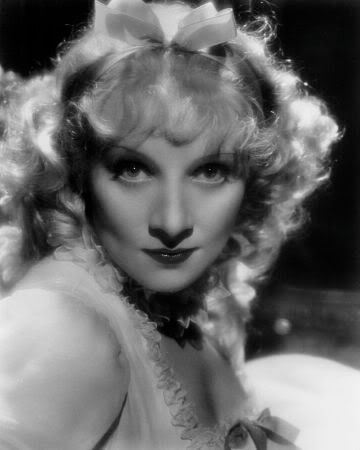
"Josef von Sternberg once said that he would not mind if his films were projected upside down, so much was his contempt for 'conventional' Hollywood storytelling. The Scarlet Empress, his sixth and penultimate teaming with his sinful alter ego Marlene Dietrich, is perhaps the most audaciously perverse film to have ever come out of a major Hollywood studio (Paramount in this case). One can surely find a stranger or weirder film in the bowels of marginalized film productions of the time (independent studios, one-shots, poverty row studios, etc.), but would be hard pressed to come up with a challenger from the top ranking studios. Granted that Paramount was always more willing than other studios to forego 'kulture' for the sake of idiosyncratic visions. As evidenced by the string of 'anarchistic' comedies they produced in the early thirties (W.C. Fields, the Marx Brothers, Mae West, Bob Hope and Bing Crosby, Wheeler and Woolsey). The Scarlet Empress, 'based' on the diaries of Catherine the Great, is Sternberg's version of 18th century Russia, much like his reconstructions of other far away exotic locations (Morocco, Shanghai, the Japanese island Anatahan, Macao). In other words, if you are looking for history with a capital H, look elsewhere. This is pure historical fantasy, with Sternberg's thematic obsessions (sex-as-power, sadism/masochism, reason vs. emotion) and painterly qualities holding rein over historical accuracy (although there are at least four innuendo references to horses that refer to Catherine the Great's apparent 'taste' for horses and her reputed death under the weight of a horse). The production may tell us that we are in 18th century Russia, but everything from Sternberg's mixing of art design styles (Byzantine, Rococo, Expressionist) to the fluctuations in acting style tell us otherwise. For example, some of the minor characters attempt to speak (albeit with American accents) in a pre-20th century argot, but Louise Dresser's snappy delivery as the tempestuous Empress Elizabeth is more fitting of a 1930's screwball comedy. In fact, the varying acting styles is one of the purest joys of this film. From Dietrich's wide-eyed innocence as the young Sophia, to her crazed gaze in the concluding shots, the heavy sexualized breathing patterns of Dietrich and Ruthelma Stevens as Countess Elizabeth, Sam Jaffe's over the top lunatic Peter the Grand Duke who, with his wide-eyed/mouthed expression and golden locks would not look out of place next to Chico and Groucho, and John Lodge's admirably wooden performance as Count Alexei.

Sternberg subtly projects on off-kilter world right from the beginning of the film. A close examination of the young Sophia's position in her bed, awkwardly twisted to face the family doctor and with a hand so awkwardly positioned underneath her head that it can not possibly be her own, is a visual indication of the bizarre 'Great Destiny' which awaits her. A destiny which even as a young child she envisions, when she not so innocently asks "What is a hangman...can I ever become a hangman?" and we are treated to a child's-eyed (we assume) montage view of the torturous travails of a court executioner. This striking montage includes lateral tracking shots of the executioner placing victims on a chopping block and then retreating in reverse as he decapitates them one by one, images of nude women burning at the stake, and being taken out of an Iron Curtain. The fleeting images we see of the nude women burning at the stakes, arms tied above their heads, sweating profusely, are as sexually charged as any image of the period. The imagery throughout this montage, which links sexuality to violence, foreshadows Catherine's eventual rise to the throne. As does the wonderful dissolve from the end of this montage, a huge close-up of a bell with a man as a human bell clapper, to the graphically matched image of Sophia's openly splayed dress as she plays on the swings. It is amazing to know that this scene (and the whole film) passed through the Production Code. Apparently the film was completed just prior to the enforcement of the Production Code (1933/34) and somehow managed to pass with their seal of approval.

Rather than the conventional linear cause and effect manner of telling a story, Sternberg advances the narrative through moments and scenes that echo and mirror each other, achieving a rhyming doubling effect. For example, soon after the film introduces Dietrich as the young Sophia, we see her prancing down the stairs to meet the Count Alexei, with the camera craning down to follow. This wide-eyed, child-like naivete is contrasted to the final scene, where Dietrich as the power hungry Catherine the Great rides a horse up the stairs to assume her position on the throne (and with her mad grin and jerky head movements takes on the physical characteristics of the Sam Jaffe's mad Grand Duke). Another key doubling effect comes in the two nearly identical bed chamber scenes. Catherine repeats moment by moment, gesture by gesture, the scene where the Empress Elizabeth tells her to blow out all the candles in her room and go through a secret passageway to tell the man in waiting he can enter her bedroom. The man of course is Count Alexei, the man Catherine has fallen in love with. The scene, filmed in stark, ominous shadows, becomes the defining moment for Catherine, where she loses any dreams of idealistic love she may have still harbored, and gleefully accepts her 'great destiny.' The moment, which Freud would call the 'primal scene,' is repeated with Catherine in the position of Elizabeth, and Count Alexei in her former role of humiliated subject. The transition becomes complete in the next scene, a stunningly photographed, highly stylized setpiece where Catherine first uses the sexuality she will exploit to attain political power by seducing the head of night patrol, Lieutenant Dimitri (Gerald Fielding). The scene begins with Catherine tossing a locket containing a photograph of Alexei out her bedroom window onto the front yard of the estate grounds (as a student pointed out in my class, a photograph in 18th century Russia is quite the jarring effect!). This cuts to five close-up shots of the locket falling through a tree, with the overall effect attaining a timeless quality in the way the seasons seem to change through the state of the tree. Catherine continues out into the front yard in search of the locket, with the camera tracking from behind a baroque, twisted white tree which stands in stark contrast to the pools of darkness. Throughout this scene Dietrich is filmed in silhouette, the only such time, to suggest the dark side of her nature which is soon to take over her being.

Sternberg's disdain for conventional narrative extends to the soundtrack. Many key scenes are played without any dialogue, including one stretch of nearly ten minutes (the wedding scene and the banquet scene, with a brief scene of her bed being blessed), and the concluding scenes leading to the ascension of Catherine to the throne (murder of the Grand Duke, montage of the populace rebelling, shots of horses riding into the castle up to the throne).

Criterion's presentation of this film on DVD is as handsome as anything they have done, or, up to their usual standards. The image quality of the new digital transfer is stunning. The film is segmented into 19 chapter breaks and bonus material includes production stills and lobby cards and a 20 minute documentary taken from a 1967 BBC broadcast called The World of Josef von Sternberg. The documentary was filmed during Sternberg's appearance in London to promote the release of his autobiography, Fun in a Chinese Laundry. The documentary alternates between Sternberg fielding questions from a very young Kevin Brownlow, mainly on his visual style, and footage of Sternberg demonstrating a lighting set-up to some young, eager film students. The latter is quite funny, as we are treated to glimpses of Sternberg's apparent autocratic demeanor, as he crassly blurts out orders on where to put the lights, position reflecting panels, etc. Whether this is Sternberg, or Sternberg playing 'Sternberg' is hard to tell, but it is fun nonetheless. The female model that is being lit, attractive and photogenic, seems overwhelmed by it all, and she never utters a word. I have no doubt that, since then, the woman has raised a few eyebrows by casually mentioning that she shares something with Marlene Dietrich: they were both photographed by Josef von Sternberg!"
- Donato Totaro

Hey there! Back again! Sorry this setup is a bit clumsy, but I wanted a pic right at the top to make my blog all purty, and the analysis for that scene ended up down here. Hope you can understand. Alrighty then - analysis for the clip I call Hangmen....

We begin with Little Sophia in her bed, being read to. At this point, she's already destined to one day become Empress of all Russia (and a most particularly cruel one at that!), and her little head is being filled with historical and political nuggets to prepare her for it I suppose. Thankfully the voiceover fades, and we only see the images that drift through the little girl's head - images of torture and mayhem. Strange stuff to be reading to a sweet little girl as she clutches her dolly, but then this is the future Empress, and more importantly, von Sternberg is establishing his code of symbolism for us. Through the course of the movie we watch the innocent, wide-eyed Sophia gradually transformed into the cruel, ruthless tyrant infamous for bloodlust (and regular lust too) and who reputedly (I'll say it because those other guys were too timid) died under a stallion while engaging in certain - ahem - well, sexual acts with it. There - I said it! This is why several times throughout the film V. S. includes horses in his mise-en-scene, always as strongly symbolic elements, and to foreshadow her bizarre death.

This is the most brilliant symbolic alchemy I've ever witnessed in any movie - this one brief scene that sees Sophia begin as a little girl clutching her dolly in bed and ends with her as a young woman laughing and being pushed on a swing, the two images separated by a montage of torture that is - not gruesome or realistic really - in fact it's more like Von Sternberg's nearly pornographic fantasy of torture - and he manages to link sex, torture, bells and hoopskirts all into one unforgettable stew. The first stage of this alchemy is when we see Sophia dissolve into an image of an Iron Maiden (so fitting! And note how long he holds on the twinned image)... but wait - there's something weird about this particular Iron Maiden. It's a strange shape - not very efficient really. It seems to bell out at the bottom, like - well, rather like a bell. Or a woman's hoop skirt. Forget for the moment that this design would fail to properly torment the enclosed prisoner - mere matters of realism or historical accuracy aren't important at all in Von Sternberg's world. What's far more important is symbolism - very much as in dreams. His films are like dreams, and this is undoubtedly the wettest of them all! And not so much for the nude women featured throughout the torture sequence, but much more so for the symbolic defiling and sexualization of Sophia and her subsequent defiling and sexual subjugation of men in the service of her power. What saves it from being pure sexual fantasy is the fact that - dammit - this really is how power sometimes works! And we all know it. Power is the ultimate aphrodisiac, but at the same time it corrupts.

I've already discussed Subtext in V. S.'s films - but to be more explicit - the subtext is sexual. It's the same subtext that exists sometimes in real life. We've all been there - meet the right person, somebody who just does it for you, and suddenly life lights up, even if all she does is say hi to you a certain way, or smile at you. This real life magic is what he captures. There's a sort of secret language that passes between you - no matter what banal words you're spouting off - maybe you're discussing the weather but your heart is swelling three times too big to fit in your chest, and you know she knows it, and the word "rain" suddenly takes on a powerful new meaning from that moment on. Well that's how symbolism works in his films. Certain images, sounds, and ideas are introduced alongside more powerful (sexual) stimulus, and then when we encounter these same symbols later in the film, we associate them with that image. Wow, I'm really rambling, aren't i?! Here's what I"m trying to say -

That bell shape of the iron maiden - it links torture to bell imagery, and also (as we'll see in a moment) to hoop skirts and to sexual subjugation. All at the same time. Like dream imagery, which Freud pointed out often carries many layers of meaning simultaneously. Ok, then we have torture, more torture, lots of nekkit women, some nekkit men, and suddenly - out of nowhere (the most brilliant image I've ever seen onscreen) an upside-down man hung inside a bell acting as a clapper!!! Whoah! See what I mean!!??!! Brilliant! But not to be satisfied with even this level of symbolic brilliance, Von S pushes it even further, into the complete sublime - by then dissolving to Sophia, now a young woman (in a hoop skirt, her costume for the rest of the film) swinging back and forth just like the bell!!!! I'm stunned by this magnificent imagery... by its power and it's economy. "The simplicity of genius" indeed!!! And not just in lighting! All in one fell swoop, he's estasblished several powerful motifs that will recur throughout the film. A motif simply means a recurring image, sound, or any recurring theme in a film. Generally when something is repeated in a film, especially if it's several times, or if there's some small difference each time, it's an important part of the film's symbolism and should be noted as such. Oh, and one final iconic image that I'm sure our feminists wouldn't fail to miss.... the tortured male inside the "iron hoopskirt" becomes her phallic symbol as well. Infreakincridble!!!! Still stunned. *** ~ Ok, this may or may not have been intended by V. S., but I just got a whole complex of imagery associations revolving around the use of the phrase (just before the clip begins) "can I be a hangman?" used by a female - especially in conjunction with that indelible image of the man hanging inside the bell, and with Jack Smith's assertion that Dietrich is the transsexual projection of von Sternberg. This is a supremely dreamlike element - so often in dreams a word or a phrase just isn't quite right (or is completley wrong) but we accept it, and it takes on a whole passel of associations. The use of the term hangman really isn't right here - no Czar ever did their own execution work! Well, possibly, given the macabr nature of some of them, but you know what I mean.


dingding.mov 3.7MB

Ok, here, we see a repetition of the bell symbolism. Sophia is of course wearing the now powerfully charged hoopskirt, and when she grabs the rope and swings on it a bit - well, need I even say it? You can almost hear the bells and the screams in your head. She's beginning to learn how to seduce, which will be key to her power later. "Hey there handsome - come inside my iron maidenskirt!!!"


candles.mov 3.9MB

Can you detect the bell symbolism in this scene? It's much subtler this time - but it's there. Mostly though, I included this scene for its sheer beauty. The Man himself designed all the statues and the incredible lighting. What always amazes me when watching this film is the way he creates zones of light and shadow and then moves the actors through them in ways that carry meaning. Dietrich's glowing face slowly emerges from shadow into the light, she blows out another candle, and slides back to darkness and secrecy. Oh, the bell symbolism - did you figure it out? The clock chimes - tiny bell sounds, and ironic that the figures seem (by their appearing just when they do alongside the Empress' words) to represent a queue of men lining up to enter her 'chamber'. I mean the current empress, the older woman. At this point Sophia is not yet empress though her name has been changes to Catherine. And I think this scene takes place in Gobo Heaven. ;) Also, the spoken words here take on a dreamlike semblance - a quiet, gentle undertone, a sussuruss of almost irrelevant sound but with a powerful meaning that emerges toward the end. Really, I'm mesmerized by the dreamlike imagery (both visual and audio, well and in all respects really) V. S. gets into this film!


lovers.mov 4.5MB

I debated tossing this one out. It's not strong cinematographywise or in any way really, except that it demonstrates Sternberg's constant return to fetishism. Oh, and it also clearly demonstrates just how bad the dialogue can get in his films! But who's listening by this point? And Man, does Dietrich look good here!


path.mov 1.0MB

No real symbolism in this or the next clip - they're just excellent little shots that fill me with delight to see. How simple could it be to walk someone down a short path? But not being one to pass up an opportunity, our man put together this visually awesome path, a marvel of light and shadow, twisting branches, ins and outs, and then danced our bell-skirted heroine along it delightfully. Trust me, he's well aware of the visual power of movement, especially movement through zones of light and shadow artfully arranged, and with the addition of a few playful spins of the skirt. This same path returns later under much more sinister circumstances, so now it's established in the viewer's mind's eye as a nice happy path which he can then defile with treachery and sexual power games. Each symbol associated with her happiness gets the same vile treatment eventually. He's truly a filmmaker's filmmaker.


flag.mov 752kb

Beautiful beautiful beautiful!!! Reminds me of Eisenstein. In fact, there's a lot about this film that reminds me of Ivan the Terrible - but then they are both about Russia in ages agone, with its incredible architecture and iconography (this one a bit later obviously, since Ivan was included in the book at the beginning). Except where Ivan makes gorgeous use of vast shimmering spaces, Scarlet Empress is crowded and flattened - even claustrophobic. In fact, speaking of Eisenstein, I must mention that von Sternberg seems to be his worthiest successor in the art of montage. In fact, I daresay - that awesome montage sequence at the beginning of Scarlet Empress is better than any I've seen by Eisenstein or anyone! I've heard it argued that you really can't link up ideas and present them in such a way that adding two together creates a new idea - but dangit, we just saw it happen! And I think anybody who's paying attention would get that sequence, though on the first and maybe second viewing they might be too stunned by the sheer visual power to even think about meaning.

I wish I had unlimited time and server space - I would have included a few shots with Von Sternberg's trademark gauze and lace, which he likes to hang across his sets in such a way that they catch the light beautifully, separate areas and people while remaining transparent, and often they're in very close proximity to candles or torches, emphasizing the vulnerability of such fabrics to fire. Ah, but then I must restrict myself to what I've already written. But hey, do yourself a tremendous favor - if this appeals to you one tenth as much as it does to me, rent or buy the DVD - trust me, it looks a lot better than the dark, grainy little versions I posted!


***

Newsflash!!!!

Ok, I seriously doubt anybody is looking at this post now, so long after I wrote it, but you never know (and this way my conscience is clear). I just discovered that Eisenstein saw Scarlet Empress and was inspired to make Ivan the Terrible by it!!!!!! Somehow I never imagined Von Sternberg making films during Eisenstein's reign, but they must have overlapped (I think, thanks to Sternberg's thoroughly modern visual sense his films seem much more recnt than Eisensteins - I tend to forget just how early Sternberg came along and indelibly stamped filmmaking with his iconic presence). And as much as I respect Eisenstein for his ideas, I find most of his films difficult to watch. Ivan the Terrible is the exception..... visually stunning and rich, unlike his more sparse earlier efforts where the Russian populace was the subject and he was trying to capture the rustic simplicity of everyday life and everyday heroism. Knowing this, I want to watch Ivan again (any excuse will do!) and see how many threads I can find linking it with Sternberg.

Tuesday, September 04, 2007

Cinemastudies; Von Sternberg and Subtext

Photo Sharing and Video Hosting at Photobucket
Josef von Sternberg


"Belated Appreciation of V. S." written by Jack Smith, famed American performance artist - originally printed in Film Culture #31 (winter, 1963-'64)

"People never know why they do what they do. But they have to have explanations for themselves and for others.

"So von Sternberg's movies had to have plots even though they already had them inherent in the images. What he did was make movies naturally - he lived in a visual world. The explanation plots he made up out of some logic having nothing to do with the visuals of his films. The explanations were his bragging, his genius pose - the bad stories of his movies. Having nothing to do with what he did (and did well), the visuals of his films.

"In this country the movie is known by its story. A movie is a story, is as good as its story. Good story - good movie. Unusual story - unusual movie, etc. Nobody questions this. It is accepted on all levels, even "the film is a visual medium" levels by its being held that the visuals are written first and then breathed to life by a great cameraman/director. In this country the blind go to the movies. There is almost no film an experienced & perceptive blind man couldn't enjoy. This is true. I was a B'way barker once and was approached by a blind man! The B.M. was right - there must be others! The manager - nobody thought it was strange - at the time I didn't - and don't now. I do think it strange that nobody uses their eyes. Occasionally a director will put in a "touch" - that can't be explained with words, needn't be, and this is always telling. But the literature of the film, its words, trite, necessarily so far as they are always doing something they shouldn't have to do, they are forced into triteness because they shouldn't be there at all - they should be in novels, anecdotes, conversations etc - (No, movies are not conversations - why should they be so limited!). Music belongs, film is rhythm, so is music - if dialogue could be seen as rhythm it would belong. But just rhythm - not the printed page.

"I don't think V. S. knew that words were in his way, but he felt it - neglected them, let them be corny and ridiculous, let them run to travesty - and he invested his images with all the care he rightfully denied the words. And he achieved the richest, most alive, most right images of the world's cinema - in company with men like von Stroheim, the genius of Zero de Conduite, early Lang, & that limited company - Ron Rice today.

"His expression was of the erotic realm - the neurotic goth deviated sex-colored world and it was a turning inside out of himself and magnificent. You had to use your eyes to know this tho because the sound track babbled inanities - it alleged Dietrich was an honest jewel thief, noble floozy, fallen woman etc, to cover up the visuals. In the visuals she was none of those. She was V. S. himself. A flaming neurotic - nothing more nothing less - no need to know she was rich, poor, innocent, guilty etc. Your eye if you could use it told you more interesting things (facts?) than those. Dietrich was his visual projection - a brilliant transvestite in a world of delerious unreal adventures. Thrilled by his/her own movement - by superb task in light, costumery, textures, movement, subject, and camera, subject/camera/revealing faces - in fact all revelation but visual revelation. An example of how visual information informs. The script says count so and so (in Devil as a Woman) is a weak character. The plot piles up situation after situation - but needlessly - von Sternberg graphically illustrates this by using a tired actor giving a bad performance. If his hero is a phony for the purposes of the story, V. S. casts an actory actor in the part & leads him into hammy performance. Which comes to acting in V. S. films. He got his effects directly through the eye. If the woman is deceptive he would not get Dietrich to give a great (in other words the convention of good acting wherein maximum craft conveys truthfulness) perf. of a woman conning. He would let her struggle hopelessly with bad lines she couldn't handle even if she were an actress. He let her acting become as bad as it could become for her. A bad actor is rich, unique, idiosyncratic, revealing of himself not of the bad script. Select the right bad actor and you can have a visual revelation very appropriate to the complex of ideas and sets of qualities that make up your film. V. S. knew this and used bad acting regularly as a technique for visual revelation (not story telling). For he was concerned with personal. intuitive, emotional values - values he found within himself - not in a script. With people as their unique selves, not chessmen in a script.

"Possibly he might have been afraid of reaction if it were known that this visual fantasy world was really his own mind. He might have deliberately obscured, distracted attention from the shock that might have occurred if his creation had been understood through the eye. To close the ears would have thrown the viewer into an undersea, under-conscious world where the realities were very different from what the script purported. He needn't have worried . As it was, no one had that ability to see. He was misunderstood and well understood. Well understood in that his covert world disturbed; Misunderstood in that no one knew why or appreciated the wonder of being disturbed. Misunderstood and done an injustice to in that finally when opinion turned against him it was for the wrong reason: (wrong not because people should not be disturbed) the insipid stories, bad acting, bad dialogue etc. Wrong reasons because they were, to be true to his expression, deliberately bad. Then he was punished - turned out of Hollywood and never again allowed to work. Only frightened people punish. Ostensibly because he had violated good technique. Good technique being used as something people hide behind when they are frightened by something they wouldn't like in themselves therefore is in themselves. And the hypocrisy of good acting, good this, good that - good movies being perpetuated - good empty - banal - untrue movies - impersonal movies."

- Jack Smith


I know - where did that come from, huh? I led up to it on the Lighting Control thread at SMA, which has been going strong and is chock full of cool lighting stuff, but turned quite naturally (at least to me) to von Sternberg. Here's another Great writeup about von Sternberg that I find endlessly fascinating. At the end of the Lighting Control thread I discussed subtext, something that's been under discussion lately among my blog brethren through email - though more in relation to dialogue. I think subtext is the key - to creating a good script with "realistic" (ie banal, incoherent, overlapping) dialogue and also to creating films without conventinal narrative structure. Von S did it under a thin veil of babbling unnecessary dialogue and narrative 'structure'. But to appreciate all this, you really must see his films. I think I'll be putting to gether a Scarlet Empress trailer showcasing some of his incredible cinematography and posting it under the influences section of my site (and of course linking it here for you, my loyal readers!).